The current guide
The count today
Seven stacks
See the stacks on a day tripGuides
Language
Currency
Find open datesfrom $95 · cancel without payingTick-off checklist
Checklist · 9 points
Tap to check items off; your progress is remembered on this device.
0 / 9 ready
Ready to go. Only the booking is left: your date and your seat on the coast road.
Book your seatThere were never twelve stacks, and the number standing has dropped over the years. Here is the count from each official source, the dates of the collapses and how to see what remains.
Editorial team, 12apostlestour.com · Updated November 7, 2026 · ~6 min read
In brief
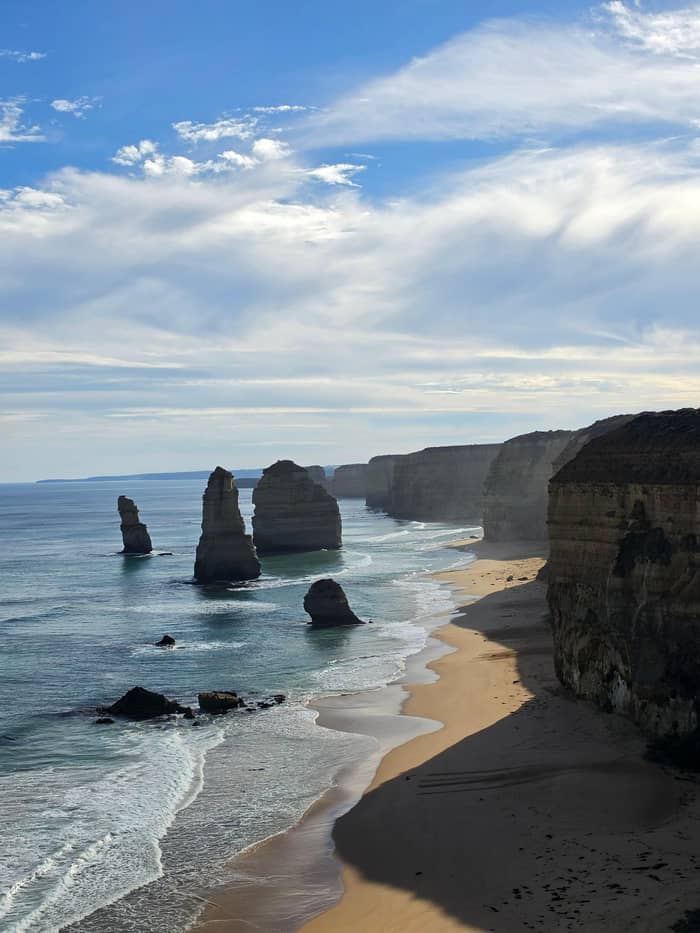
If you want one number, it is seven. The Parks Victoria visitor guide for Port Campbell National Park says there are currently seven rock stacks comprising the Twelve Apostles, with six on display in the classic view and the seventh a few metres from the corner of the main viewing platform.1 Another Parks Victoria page repeats the figure, describing seven limestone stacks that are the remaining pieces of mainland Australia.5
That answer comes with a history. Parks Victoria says there were never actually twelve rock stacks here, and that there were nine up until 2005, when one collapsed, and another fell in 2009.2 The name has outlived the count, and it stuck even as the stacks fell. The number in the name is best read as a title rather than a tally, and no sign at the viewpoint pretends otherwise.
So the honest answer to how many of the 12 Apostles are left is seven, with the caution that other official pages give other figures. The rest of this page shows each one, dates the collapses and explains why a limestone coast keeps changing. It also tells you how to see the stacks that are still there on a day from Melbourne.
Source by source
| Source | What it says | Count |
|---|---|---|
| Parks Victoria visitor guide | Seven currently make up the Apostles1 | Seven1 |
| Parks Victoria stacks page | Nine until 2005, then another fell2 | Seven remain5 |
| Heritage listing | Reduced by wave erosion3 | Eight3 |
| 2009 news report | First thought one of the remaining12 | Eight12 |
| Tourism Australia | Pillars once joined to the cliffs4 | Count not given4 |
Counts are as each source writes them; the sources were written at different times.1,3
The Australian Government heritage listing for the Great Ocean Road describes a collection of limestone stacks 45 metres high that, due to erosion by waves, have been reduced to eight stacks.3 That listing was inscribed on the National Heritage List in 2011, so its count may be older than the current Parks Victoria guide, and the gap between eight and seven may simply be time.11,3,1
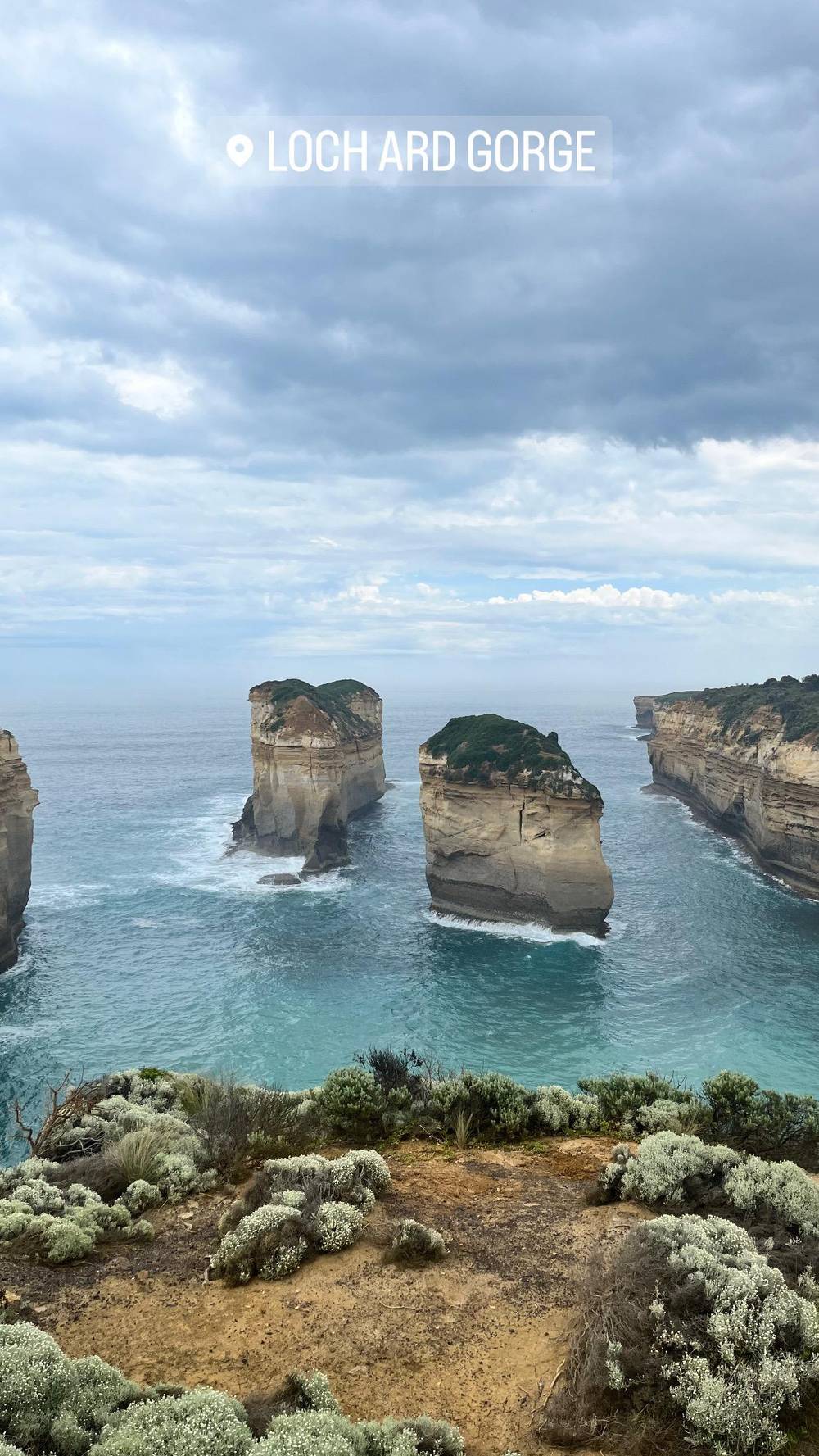
A news report from 2009 shows how easily the numbers mix.12 When a rock stack crumbled into the sea that September, it was first thought to be one of the eight remaining Twelve Apostles.12 Parks Victoria then said it was not an Apostle at all, but the smallest of the group known as the Three Sisters, seen from the Razorback Lookout at Loch Ard.13,14 That correction matters for the count, since a stack that was never an Apostle should not be subtracted from the total.13
Parks Victoria's own visitor page still lists a fall in 2009, so the sources do not fully agree with each other.2 We do not try to settle it. What we can say is that the official count today is seven, that eight appears in an older listing, and that nine is the figure for the start of this century.1,3,2 Check the date of any page that gives a number.
The best-known fall is the one in 2005. A news report quoting Parks Victoria says a large stack fell at the Twelve Apostles in July 2005, and Parks Victoria itself says it was the one that took the count from nine.10,2 After that day, the view from the platform was never quite the same, and the stacks you see now are the ones that remained.
The coast has dropped other pieces. The Parks Victoria visitor guide says the inner arch of London Bridge collapsed in 1990, leaving two people stranded on the outer side, and they were later rescued by helicopter.9 The heritage listing gives the date as January 1990 and adds that Island Arch collapsed in June 2009.8 A June 2009 news report describes a freestanding, bridge-shaped part of the cliff at Loch Ard Gorge collapsing and leaving two formations like the Apostles.15
None of these dates is a reason to stay away. The heritage listing calls the Port Campbell coast the definitive place in Australia to observe and study coastal erosion, in large part because of its rapid erosion and spectacular, well-publicised stack collapses.16 You are visiting a coast in motion, and the view you photograph today will not be exactly the view your children see.
A short chooser
Match the page you read to the answer and the fact behind it.
If I want the official count today
Seven
The Parks Victoria visitor guide says seven currently make up the Apostles.1
If I read the Australian Government listing
Eight, as of that entry
The heritage listing says the stacks were reduced to eight.3
If I read about a 2009 stack fall
It was a Sister, not an Apostle
Parks Victoria said the 2009 stack was part of the Three Sisters.13,14
If I read a page about the years before 2005
Nine, up to 2005
Parks Victoria says nine stood until 2005.2
If I want to see them myself
Take a day trip
The day we list visits the Apostles from $95.
Three counts
The current guide
Seven stacks
See the stacks on a day trip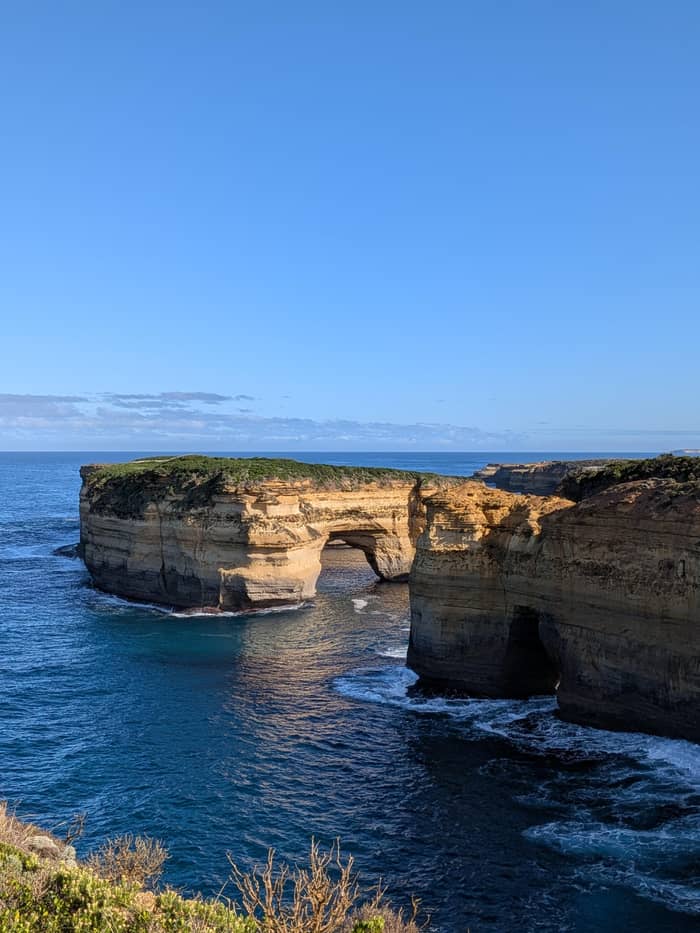
The heritage listing
Eight stacks
See the stacks on a day trip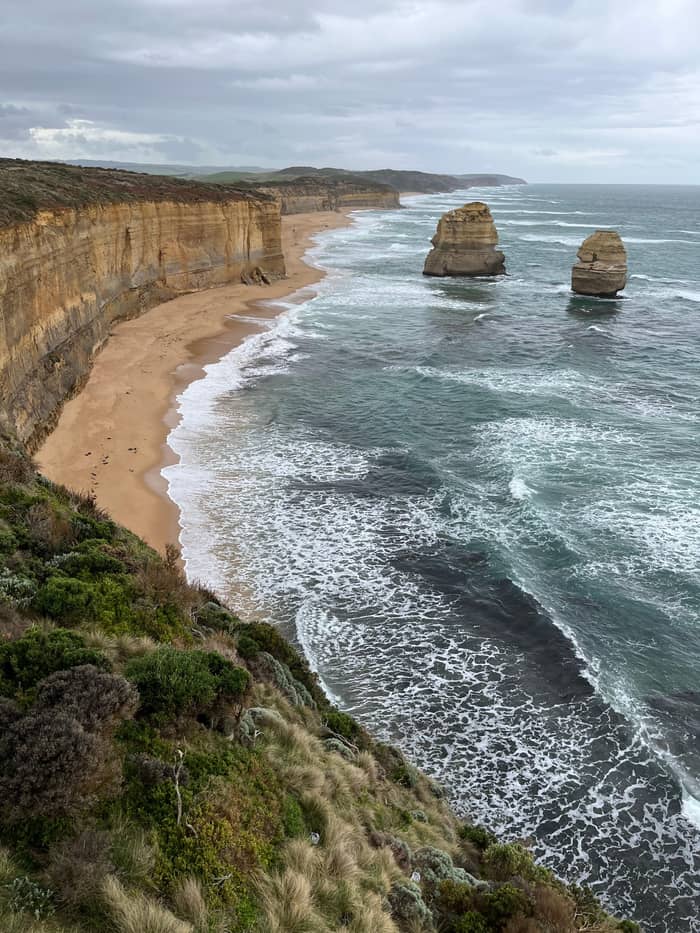
Never twelve
Nine stacks
See the stacks on a day tripThe stacks are limestone, a sedimentary rock that Parks Victoria describes as a build-up of shells, coral and animal skeletons.6 The rock began as sediment on a sea floor, was compressed layer by layer, and shows today as horizontal stripes of different colors in the cliffs and the stacks.6 It is a soft stone, which is why the sea works on it so well.
The shaping took a long time. Parks Victoria says that from about 10-20 million years ago, wild seas and fierce winds began eroding the edge of the continent, forming caves in the cliffs, which became arches, and the arches collapsed to leave stacks standing in the ocean.7 The visitor guide adds that waves, winds and seeping rainwater working on the softer limestone form the stacks and islands.22
The same process continues. The heritage listing says the stacks are susceptible to further erosion from the waves, and that the Port Campbell coast is valued for its rapid rate of erosion.3,16 Parks Victoria also says the scrubby plants along the cliff tops hold the cliffs together, and that the more visitors trample them the more the cliffs erode, which is why you are asked to stay on formed paths.23
From sea floor to seven stacks
Long ago
Shells, coral and animal skeletons settled and were pressed into limestone.6
Millions of years ago
From about 10-20 million years ago the sea cut caves, which became arches.7
Arches fall
The arches collapsed and left towering stacks in the ocean.7
Late last century
Early this century
A large stack fell at the Twelve Apostles in July 2005.10
Today
Parks Victoria says seven stacks currently make up the Twelve Apostles.1
The number twelve is a name, not a measurement. Parks Victoria says there were never actually twelve stacks here, and the highest count it gives is nine.2 The title belongs to the viewpoint and the idea of a group of stone figures standing in the sea, and it has outlived the stacks it once described.
Some neighbours are not counted at all. Tourism Australia says Gog and Magog, the two stacks you see from the beach at the Gibson Steps, are not considered part of the 12 Apostles.24 The Great Ocean Road Coast and Parks Authority says that from the sand the cliffs rise high above and the offshore stacks known as Gog and Magog stand just beyond the shore.25 So a count depends on what you decide to include.
When someone says the Apostles have fallen to a number, ask which stacks they mean. Different pages draw the line in different places, and the line moves as stacks fall. The count that matters for a visit is the one you can see: six in the classic view from the main platform, and a seventh a short way off.1
Video
Into the Wild Films on YouTube · Playback files load only once you tap play.
There were never actually twelve rock stacks here. There were nine up until 2005 when one collapsed, then another fell in 2009.
The stacks are well worth the long drive, even in their reduced numbers, and a visit is the best way to make sense of all these figures. Tourism Australia gives a scenic 4.5-hour drive from Melbourne to the Apostles along the Great Ocean Road, and a guided day takes the driving off your hands.26 The day we list runs 13 hours 30 minutes, visits the Gibson Steps, the 12 Apostles and Loch Ard Gorge, and starts from $95.
Give the view a few minutes. Parks Victoria says the stacks rise from the Southern Ocean, and the Great Ocean Road Coast and Parks Authority says their colors shift from soft gold in the morning to rich orange and red at sunset.27,17 A guide will point out the stacks in the classic view and the seventh near the platform corner.1 If you walk on, the Twelve Apostles to Gibson Steps walk is 2.2 km return in an hour.20
Keep to the paths. The visitor guide says cliffs can collapse at any time without warning, and asks you to stay away from cliff edges and the base of cliffs.18 That is the same erosion that made the stacks, and it does not take a day off when visitors arrive. The lookouts are built where the view is safe, so use them.
FAQ
The Parks Victoria visitor guide says there are currently seven rock stacks comprising the Twelve Apostles.1
Six are on display in the classic view, and the seventh is a few metres from the corner of the main viewing platform.1
Parks Victoria says there were never actually twelve rock stacks here, and nine stood until 2005.2
The inner arch collapsed in 1990, leaving two people stranded on the outer side until they were rescued by helicopter.9
The heritage listing says the stacks are susceptible to further erosion from the waves.3
Sources
Planning the Great Ocean Road from Melbourne? A real person answers here.